
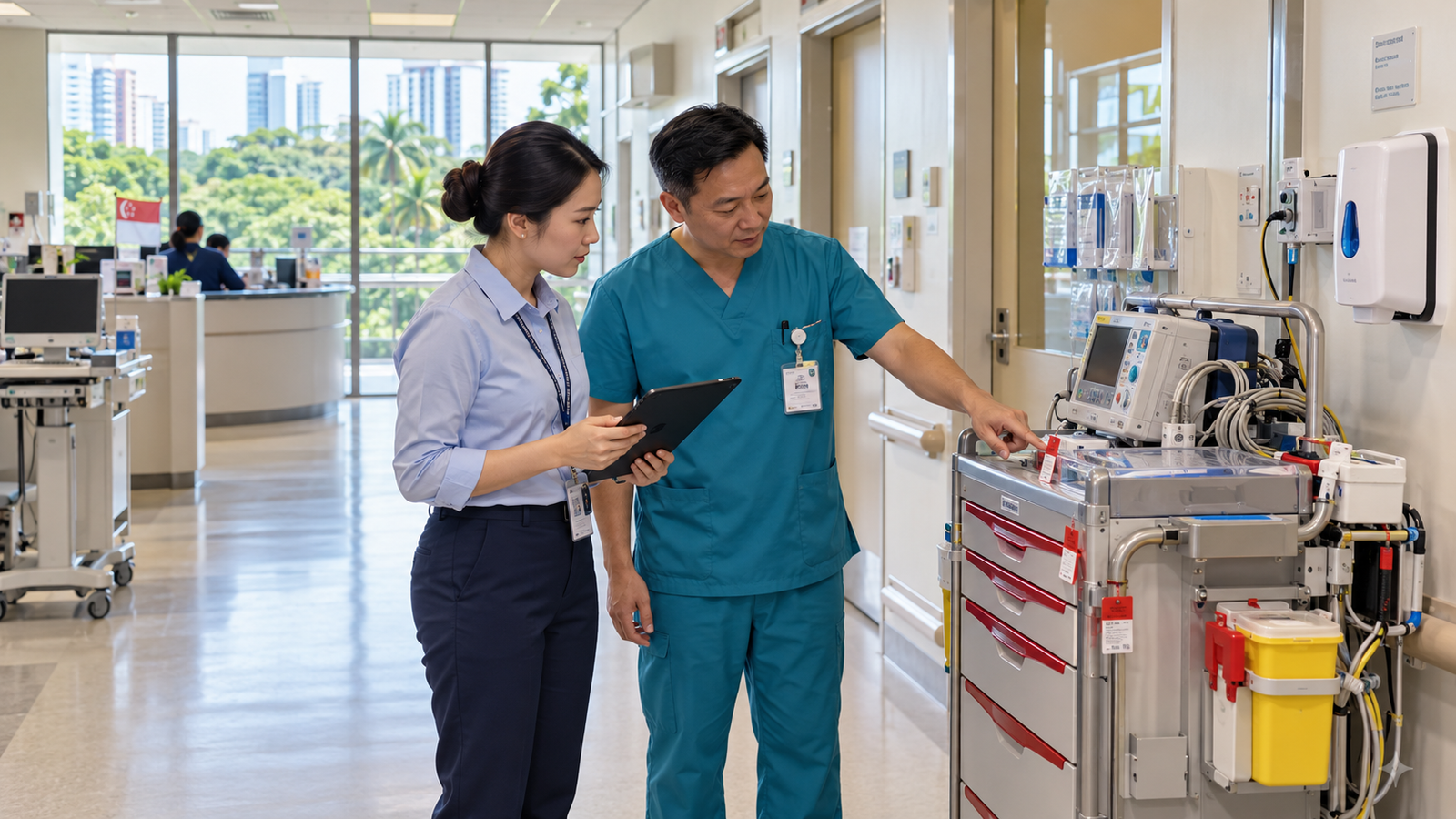
Singapore is globally recognized for having one of the most efficient and high-performing healthcare systems in the world. With a carefully structured mix of public and private providers, strong governance, and a reputation for clinical excellence, hospitals in Singapore operate under constant pressure to maintain the highest standards of care.
Yet beneath this reputation lies a growing complexity that many healthcare leaders are quietly navigating. Hospitals today are no longer simple care environments. They are highly dynamic ecosystems where clinical care, technology, infrastructure, logistics, and human behavior intersect every second of the day.
In such an environment, safety is not something that can be assumed. It must be continuously verified, measured, and improved.
This is where Hospital Safety Inspection & Risk Management tools become essential—not as an administrative burden, but as a strategic necessity.
The Reality of Risk in Modern Singapore Hospitals
Hospitals in Singapore operate within one of the most tightly regulated environments in Asia. The introduction of the Healthcare Services Act reflects a shift toward more flexible, risk-based regulation of healthcare services, ensuring that patient safety remains at the core of all operations.
At the same time, hospitals must comply with multiple regulatory bodies simultaneously, including fire safety, environmental, building, and workplace safety authorities. Missing even a single requirement can lead to inspections, penalties, or operational disruption.
This multi-layered regulatory landscape creates a simple but critical reality:
Hospitals are no longer judged only on clinical outcomes.
They are judged on systems, compliance, and risk management performance.
Why Hospital Safety Inspections Are Critical in Singapore
Safety inspections are not merely routine exercises. They are structured processes that allow organizations to identify risks, evaluate controls, and ensure that safety measures are functioning effectively.
In Singapore, regular inspections are strongly encouraged because they help organizations uncover risks, reduce incidents, and improve overall operational performance.
In a hospital setting, this takes on an even deeper meaning.
A hospital is an environment where:
- patients are vulnerable
- staff operate under pressure
- equipment is complex
- processes are interdependent
A small failure—whether in hygiene, fire safety, equipment maintenance, or procedures—can have disproportionate consequences.
Safety inspections provide the mechanism to detect these failures before they escalate.
The Shift Toward Structured Risk Management
Singapore’s regulatory philosophy has evolved significantly over the years. Rather than prescribing every detail, the system now emphasizes risk-based management, placing responsibility on organizations to proactively identify and control risks.
Under the Workplace Safety and Health framework, employers are required to assess risks and implement control measures before incidents occur.
This shift has major implications for hospitals.
It means that:
- compliance is not enough
- documentation is not enough
- reacting to incidents is not enough
Hospitals must demonstrate that they actively manage risk as a system.
This is precisely where structured tools like the Hospital Safety Inspection & Risk Management Toolkit come into play.
The Hidden Challenge: Complexity and Fragmentation
One of the biggest challenges in hospital safety is not the lack of effort—it is the lack of structure.
In many hospitals, safety-related responsibilities are distributed across multiple departments:
- facilities management
- infection control
- nursing leadership
- risk management teams
- compliance officers
Each department may perform checks, maintain records, and manage risks within its own scope. However, without a centralized and structured system, this often leads to fragmentation.
The result is:
- gaps in oversight
- inconsistent documentation
- duplication of effort
- lack of clear visibility for management
A structured audit tool addresses this challenge by bringing everything into a single, coherent framework.
What Hospital Safety Inspection & Risk Management Really Means
Hospital safety is often misunderstood as a checklist of requirements. In reality, it is a continuous process that involves:
- identifying hazards
- evaluating risks
- implementing controls
- monitoring effectiveness
- improving systems
Health and safety audits play a crucial role in this process by assessing whether existing protocols are effective and identifying areas for improvement.
In a Singapore hospital, this may include:
- patient safety risks
- fire safety compliance
- infection control measures
- emergency preparedness
- equipment safety
- environmental health
- staff training and competency
Managing all of these elements manually is not only inefficient—it is risky.
Why Hospitals in Singapore Need Structured Audit Tools
The Hospital Safety Inspection & Risk Management Toolkit is designed to bring structure to complexity.
Instead of relying on scattered documents, informal inspections, or reactive measures, the tool provides a systematic way to evaluate safety across the entire organization.
It enables hospitals to move from:
- fragmented checks → integrated audits
- reactive responses → proactive risk management
- isolated data → centralized insight
This transformation is critical in a high-performance healthcare system like Singapore’s, where expectations are consistently rising.
From Compliance to Performance
One of the most important shifts enabled by structured audit tools is the move from compliance to performance.
Compliance is about meeting minimum requirements.
Performance is about:
- continuously improving
- reducing risk exposure
- enhancing operational efficiency
- strengthening patient trust
In Singapore, where healthcare providers operate in a competitive and highly transparent environment, performance is what differentiates leading institutions.
A structured safety audit tool helps hospitals not only meet expectations, but exceed them.
The Role of Data and Visibility
In modern healthcare management, data is everything.
Hospital leaders need clear, accurate, and timely information to make decisions. Without visibility, risks remain hidden until they become incidents.
A structured inspection and risk management tool provides:
- clear dashboards
- measurable compliance levels
- identified risk areas
- tracked corrective actions
This level of insight allows management to:
- prioritize resources
- address critical risks
- monitor progress
- demonstrate accountability
In a system like Singapore’s, where audits and inspections can occur at any time, this visibility is invaluable.
Preventing Incidents Before They Happen
Perhaps the most important value of a hospital safety inspection tool is prevention.
Incidents in hospitals are rarely caused by a single failure. They are usually the result of multiple small issues that go unnoticed over time.
A missing check.
An outdated procedure.
A training gap.
A maintenance delay.
Individually, these may seem minor. But together, they create risk.
Regular inspections and audits help identify these issues early, reducing the likelihood of incidents and improving overall safety culture.
Building a Culture of Safety in Singapore Hospitals
Safety is not just about systems. It is about culture.
In the best-performing hospitals, safety is embedded in daily operations. Staff are aware, engaged, and proactive. Risks are discussed openly. Improvements are continuous.
A structured audit tool supports this culture by:
- creating consistency
- encouraging accountability
- reinforcing standards
- making safety visible
When safety becomes part of the organization’s DNA, compliance becomes a natural outcome rather than a forced requirement.
Supporting Inspections and Regulatory Expectations
In Singapore, healthcare inspections are designed to safeguard patient safety by ensuring compliance with regulatory requirements.
These inspections can be:
- routine
- unannounced
- triggered by changes or incidents
Hospitals that rely on manual systems often struggle to prepare for these inspections.
In contrast, hospitals using structured audit tools are always ready.
They can:
- demonstrate compliance
- provide documentation instantly
- show evidence of continuous improvement
This readiness reduces stress, improves outcomes, and strengthens relationships with regulators.
The Strategic Advantage of Being Proactive
Forward-thinking hospitals in Singapore are already moving toward structured safety management.
They understand that:
- expectations will continue to rise
- regulatory scrutiny will increase
- patient awareness will grow
In this environment, being reactive is no longer sustainable.
A proactive approach—supported by tools like the Hospital Safety Inspection & Risk Management Toolkit—provides a clear competitive advantage.
Practical Impact: What Changes After Implementation
Before implementing a structured tool, many hospitals experience:
- scattered documentation
- inconsistent inspections
- unclear responsibilities
- limited visibility
After implementation, the transformation is clear:
Safety becomes structured.
Responsibilities become defined.
Data becomes accessible.
Risks become visible.
Actions become trackable.
This is not just an operational improvement. It is a strategic shift.
Why This Matters More Than Ever in Singapore
Singapore’s healthcare system is evolving rapidly.
New facilities are being built.
Technology is advancing.
Patient expectations are increasing.
At the same time, regulatory frameworks are becoming more sophisticated, focusing on outcomes rather than just compliance.
In this environment, hospitals must operate with precision, clarity, and control.
Structured safety inspection and risk management tools are no longer optional—they are essential infrastructure for modern healthcare.
Conclusion: Safety as a Foundation of Excellence
Singapore has built a healthcare system that is admired around the world. But maintaining that reputation requires continuous effort, especially in areas that are less visible but equally critical—like safety management.
Hospital Safety Inspection & Risk Management is not just about avoiding incidents. It is about creating environments where patients feel safe, staff feel supported, and organizations can operate with confidence.
The Hospital Safety Inspection & Risk Management Toolkit provides a practical, structured way to achieve this.
It turns safety from an abstract concept into a measurable, manageable, and continuously improving system.
And in a healthcare environment like Singapore’s, that makes all the difference.
Final Thought
If your hospital operates in Singapore—or aims to meet Singapore-level standards—the question is not whether you need structured safety inspections.
The question is how soon you implement them.
Because in healthcare, safety is not a feature.
It is the foundation.
